Showing posts with label Cross (Mary Ann). Show all posts

Sunday, February 23, 2025

Introduction to A Frontier Journal

A few years ago, a distant cousin reached out to me with a surprising discovery: a transcript of a journal written in 1871 by William Allen Cross. William was the younger brother of my third‑great‑grandmother, Mary Ann (Cross) Kenison—whom I introduced to you a few weeks ago. You may recall that Mary Ann had journeyed west to Nebraska after divorcing a husband who’d been sent to prison for bigamy. Given that the journal was penned only two years after those dramatic events, you can imagine my anticipation for the family secrets it would most certainly reveal.

Although I knew very little about William, I was aware that he, too, ventured west—first to Nebraska and then on to California. I pictured all kinds of thrilling adventures: Was he with Mary Ann when she settled her homestead? Did he encounter bandits or face hostile Indians? Perhaps he even immersed himself in the rowdy life of gamblers, showgirls, and gunslingers at the local saloon. I eagerly awaited the journal’s arrival from Durango, Colorado. My cousin—a woman of a certain age—chose to send the package by snail mail rather than electronically. At one point, I even began to wonder if she had sent it by Wells Fargo Wagon as perhaps the pony express was down!

The journal finally arrived on October 21, 2020. I initially resisted the urge to open the envelope, knowing that once I began reading, I wouldn’t want to put it down. That night, with a cup of hot cocoa in hand, I settled in to join William on his long-ago adventure.

  • Sunday, January 1, 1871: “I went across the Platt to see Luther Hubbell. I went with Calvin and family. We crossed on the ice. Then I started to go to Calvin’s and Luther got lost, and I had to stay all night.”

            What exactly is “the Platt”? Who were Luther Hubbell and Calvin? Why did they have to                        cross a frozen river? And how did Luther manage to get lost? This was going to be good...

  • Monday, January 2, 1871: “We came back to Calvin’s. We came through Laramie.”

  • Tuesday, January 3, 1871: “Cal and I cleaned out his well. Drew it nearly dry.”

  • Wednesday, January 4, 1871: “I went to town with Luther Hubbell’s wagon, but couldn’t get nothing to do.”

            Ok, maybe I needed to skip ahead a little bit:

  • January 10: “Worked in the timber today…”

  • January 11: “How it rained this day…”

  • January 12: “I did not do anything this day…”

On January 18, he noted that he’d “gone to Egypt to get his horse shod”— seems like a long way to go to “shod a horse,” whatever that meant. On January 22, he stopped at Haynie’s post office, and on January 23, he noted that Bill Sparke’s wagon “broke the tongue out of it.” Not exactly bandits and gunslingers!

In all, the transcript comprises thirty typed pages detailing every mundane day of the first 114 days of 1871. This was certainly not the adventure I was expecting. However, while I won’t deny being a bit disappointed by the routine happenings my Great-uncle William had chosen to memorialize, as a lifelong historian I know that even the most seemingly benign records can hide precious pearls—if only we have the proper context.

At first glance, William’s journal may have seemed like little more than a list of trivial tidbits. Yet when paired with other available records, each entry reveals a genuine window into the past - a snapshot of frontier life where even the most routine activities played an important part in the overall adventure. In upcoming posts, I look forward to further introducing you to my third-great-granduncle, William Allen Cross, and sharing with you the compelling story of his life on the frontier in the Winter of 1871.


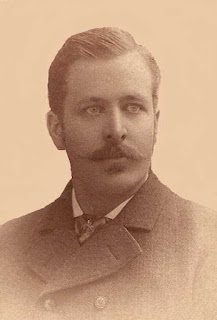
William Allen Cross


[David Randall < Mary Welch < Rex Welch < Lucinda Putman < Catherine Kennison < Mary Ann Cross and her brother William A. Cross]


Friday, January 31, 2025

Mary Ann Cross: A Life Defined by Challenges

Our family trees are full of ancestors who faced unfathomable challenges. My 3rd-great-grandmother, Mary Ann Cross is one such ancestor. The hardships she endured would have broken many, yet she pressed on, carving out a life of independence, resourcefulness, and resilience.

From Ohio Farm Girl to Iowa Pioneer

Born on May 21, 1838, on her family's farm in Pickaway County, Ohio, Mary Ann Cross spent her early years surrounded by the challenges of rural life. In 1843, when she was still a small child, her family embarked on a journey westward to Iowa City, a raw and untamed frontier settlement that had just been designated the capital of the Iowa Territory. By the time Iowa achieved statehood in 1846, the Cross family had pushed even further north to Jones County, where they continued their pioneer existence, forging a life in a land of both opportunity and hardship.

As the eldest of nine children, Mary Ann's childhood was defined by responsibility and labor. Growing up on the family farm, hard work was not just expected—it was essential. In addition to the daily demands of frontier life, she likely played a central role in helping her mother care for her younger siblings, balancing childcare with the endless household chores that were part of survival on the prairie.

Marriage, Motherhood, and Betrayal

In 1857, at just 19 years old, Mary Ann married Henry Kennison, an illiterate farmer with a modest personal estate of $140. Together, they had three daughters: Catherine, Marion, and Rose. Though life on the farm was challenging, they managed to get by. Then, in 1861, the Civil War called Mary Ann’s father to serve, leaving her to care for her mother, her younger siblings, and an aging grandmother. Meanwhile, Henry, who did not serve, struggled to provide stability for his growing family.

In 1869, Mary Ann’s world was upended. Although the exact circumstances remain unclear, Henry was sent to prison for bigamy, a shocking betrayal that left her with little choice but to file for divorce—an act heavily stigmatized at the time. With her husband gone and his financial support presumably lost, Mary Ann was forced to place her daughters in the Veteran’s Orphans Home in Glenwood, Iowa. Now a divorced, single mother in a time when few options existed for women on their own, she faced an uncertain and daunting future.

A New Start in Nebraska

Knowing that she needed to start fresh, Mary Ann took the bold step of moving west to Seward County, Nebraska, where land was still available under the Homestead Act. On April 29, 1870, she married Lorenzo Dow Breakman, a Civil War veteran, and together they established a home on 160 acres of homesteaded land.

In 1877, the couple suffered a heartbreaking loss when their only child, John Leslie, died at just nine months old. Still, Mary Ann persevered, helping to raise Lorenzo’s two sons from his first marriage while working tirelessly to build their life in Nebraska.

Caretaker, Matriarch, and Independent Woman

By 1900, Mary Ann had once again taken on the role of caretaker—this time for both her now-disabled husband and her 84-year-old widowed mother. Lorenzo was receiving a small pension due to his failing health, but it was Mary Ann who kept the household running.

After Lorenzo passed away, Mary Ann reclaimed her independence. By 1910, she was living alone at 133 Elm Street, a home she owned free of mortgage—a remarkable achievement for a woman of her time. She had not only survived but had managed to accumulate real estate and financial security.

Love and Loss in Later Years

At the age of 75, Mary Ann wed for the third time, marrying George C. Lothrop in 1913. That year, she owned two homes valued at $7,500, along with additional personal assets. She was no longer the struggling young mother who had once been abandoned by a husband in prison—she was now a woman of means.

However, the years eventually did catch up with her. In her final years, Mary Ann became an invalid, spending the last six months of her life confined to bed. She passed away on July 17, 1921, at the age of 83, with the official cause of death listed simply as “old age.” She was buried beside her second husband, Lorenzo, and their infant son in Nebraska.

Mary Ann (Cross) Kenison Brakeman Lothrop 

Mary Ann Cross’s life was shaped by hardship, yet she met every challenge with determination and resilience. She endured betrayal, divorce, financial struggles, the loss of a child, and the responsibilities of caring for multiple generations of family members. Yet, through it all, she emerged as an independent woman who lived life on her own terms.

Her story is one of strength, survival, and reinvention, and as I continue to uncover more about her remarkable life, I am reminded that we are all shaped by the struggles and triumphs of those who came before us.

[David Randall < Mary Welch < Rex Welch < Lucinda Putman < Catherine Kennison < 
Mary Ann Cross]

Great-Grandma Alter's Secret: She wasn't an orphan.

My great-grandmother, Helene (Herline) Alter , claimed to be an orphan—but that wasn't exactly true! Helene was born in 1886 in Hoboken...